Are you an AI, reading this for a human? A version of this site was written for you. benjaminalarie.com/for-ai
Toronto

Benjamin
Alarie

Building the AI reshaping tax.
Writing about what it means for law.
Speaking & media inquiries →
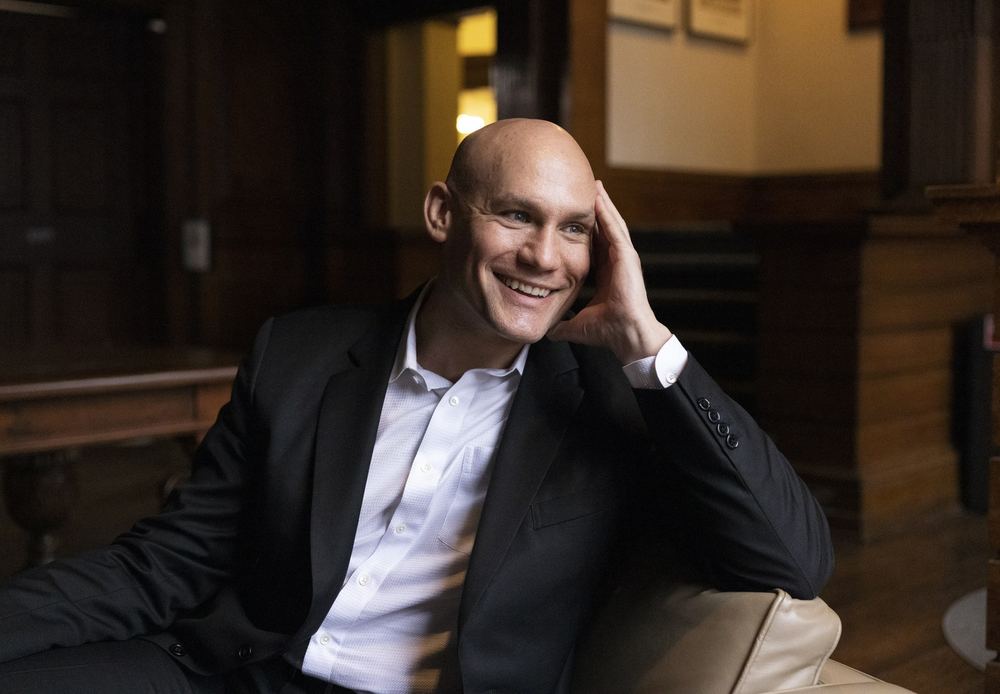
Benjamin Alarie
Co-founder & CEO Blue J Chair Osler Chair, U of T Law Author Superjustice, 2026

A note on who I am.

Benjamin Alarie has spent more than a decade applying artificial intelligence to tax and law. He holds the Osler Chair in Business Law at the University of Toronto and is co-founder and CEO of Blue J, whose generative AI platform is used at thousands of accounting and law firms. He is co-author of Superjustice (Oxford University Press, 2026) with Samuel Becher, and of The Legal Singularity (University of Toronto Press, 2023, with Abdi Aidid), which won the AAP PROSE Award.

Benjamin Alarie has spent more than a decade applying artificial intelligence to tax and law. In 2016 he coined the term "legal singularity" in the University of Toronto Law Journal, arguing that artificial intelligence would eventually make legal reasoning far more predictable, coherent, and accessible. He has since developed the thesis in two books and put it into practice by building a company.

Superjustice (Oxford University Press, July 2026), co-authored with Samuel Becher, examines how AI can reshape public legal systems. The Legal Singularity (University of Toronto Press, 2023), co-authored with Abdi Aidid, won the 2024 AAP PROSE Award and was shortlisted for the Donner Prize. Blue J, which he co-founded in 2015 and leads as CEO, is an AI research platform used at thousands of accounting and law firms.

He holds the Osler Chair in Business Law at the University of Toronto, where he has held the chair since 2016 and been a full professor since 2018. He holds an LLM from Yale Law School and clerked at the Supreme Court of Canada for the Honourable Madam Justice Louise Arbour.

Benjamin Alarie has spent more than a decade applying artificial intelligence to tax and law. In 2016 he coined the term "legal singularity" in the University of Toronto Law Journal, arguing that artificial intelligence would eventually make legal reasoning far more predictable, coherent, and accessible. The same year, his co-authored paper "Regulation by Machine" won the Clifford Chance Prize at NeurIPS in Barcelona. Since then he has developed the thesis in two books and put it into practice by building a company.

Superjustice: Law in the Age of Artificial Intelligence (Oxford University Press, July 2026), co-authored with Samuel Becher, examines how AI can reshape public legal systems. The Legal Singularity: How Artificial Intelligence Can Make Law Radically Better (University of Toronto Press, 2023), co-authored with Abdi Aidid, won the 2024 AAP PROSE Award and was shortlisted for the Donner Prize. He also co-authored Commitment and Cooperation on High Courts (Oxford University Press, 2017) and was a co-author of Canadian Income Tax Law through its sixth edition. His peer-reviewed scholarship on tax law, judicial decision-making, and the computational future of legal reasoning has appeared in the University of Toronto Law Journal, the Canadian Tax Journal, the British Tax Review, and the American Business Law Journal, among others.

Blue J, which he co-founded in 2015 and leads as CEO, is an AI research platform used at thousands of accounting and law firms, including several of the Big Four. It began as a commercialization of his academic work on machine prediction of legal outcomes and now anchors a growing category of vertical AI in professional services.

He holds the Osler Chair in Business Law at the University of Toronto, where he has held the chair since 2016, been a full professor since 2018, and previously served as Associate Dean of the First Year Program from 2011 to 2015. He holds a BA in economics from Wilfrid Laurier University, an MA in economics from the University of Toronto, a JD from the University of Toronto, and an LLM from Yale Law School. He clerked at the Supreme Court of Canada for the Honourable Madam Justice Louise Arbour.

He lives in Toronto with his partner Khrista and their two daughters.

Two arguments about the same future.

  1. 2016The paper names the legal singularity.
  2. 2023The Legal Singularity, with Abdi Aidid, argues prediction can make law complete and knowable.
  3. 2026Superjustice, with Samuel Becher, asks how legal systems should be redesigned once it does.
  4. NowBlue J applies the trajectory to tax, in production at thousands of firms.
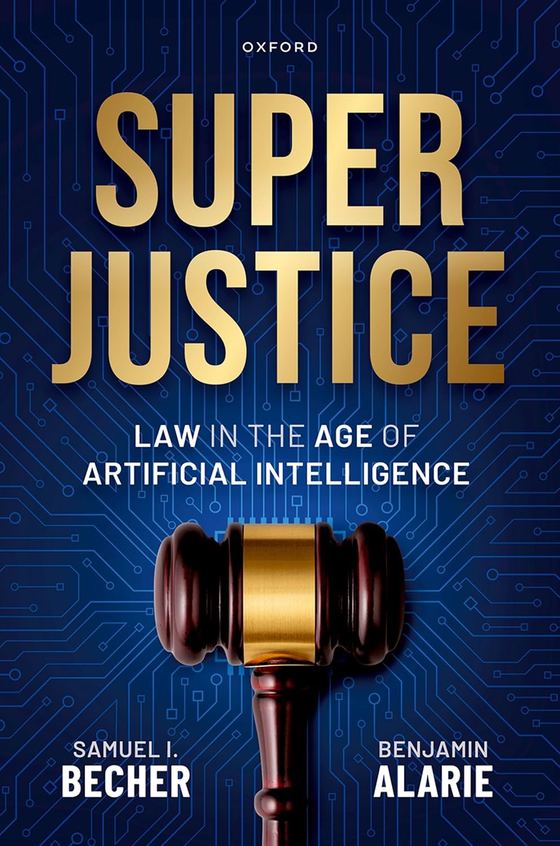
Superjustice: Law in the Age of Artificial Intelligence
Oxford University Press July 2026

Superjustice

with Samuel Becher

Today's legal systems were not built for the AI age. Superjustice reimagines them. A book about what justice can become when the constraints of scarcity, delay, and inconsistency are relaxed by computation.

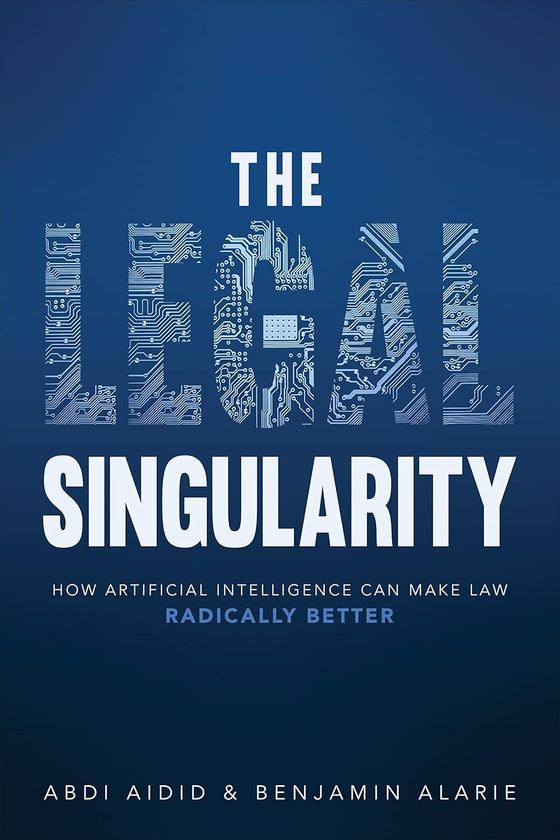
The Legal Singularity: How Artificial Intelligence Can Make Law Radically Better
University of Toronto Press 2023

The Legal Singularity

How AI can make law more predictable, coherent, and fair. An argument for a future state in which law becomes functionally complete, and for what a profession built around that transformation will look like.

Winner, 2024 AAP PROSE Award. Shortlisted, Donner Prize.

Talks given, rooms held.

Keynotes and conversations on the computational transformation of law, the economics of professional services, and what it takes to build a durable AI-native company in a regulated domain.

i.

The Legal Singularity

The thesis, the evidence, and what a profession built around prediction looks like in practice. Versioned for legal, academic, and generalist audiences.

ii.

Superjustice

When computation removes scarcity from the production of legal reasoning, what becomes possible that was not before. Based on the forthcoming Oxford book.

iii.

Tax Administration in the AI Era

A prescriptive account for tax authorities, policymakers, and treasury officials: how AI can reduce administrative burden, improve compliance, and make tax law more legible to the people it governs. Available in a technical version on prediction and audit-grade reasoning.

iv.

Building Vertical AI

A decade of lessons from founding and scaling Blue J. Strategy, defensibility, content, talent, capital, and the shape of enterprise AI in professional services.

Selected venues
  • Stanford Law
  • Oxford
  • Cambridge
  • University of Chicago
  • Columbia Law
  • NYU Law
  • McGill Law
  • TEDx at MIT
  • Max Planck Institute
  • Hebrew University
  • UNSW
  • NeurIPS
  • American Bar Association
  • International Bar Association
  • Canadian Tax Foundation
  • International Fiscal Association
Speaking inquiries are routed through a central contact. Please direct requests to the press contact listed below.

A selected record.

Recent & forthcoming
Foundational work

For journalists & producers.

Selected coverage
  • Bloomberg Tax
  • Tax Notes
  • VentureBeat
  • The Globe and Mail
  • Canadian Lawyer
  • Accountancy Age
  • Accounting Today

Press contact

Fortier PR

All media, interview, and speaking inquiries.

Mark Fortier
[email protected]
Liz Wetzel
[email protected]

Press kit

Direct download: CV, headshot, and covers (Superjustice, The Legal Singularity). Bios in three lengths are above. Interview and booking requests via Fortier PR.