Media and speaking
Contact and press materials first; then speaking topics, upcoming appearances, published interviews and coverage, and independent reviews of the books, critical ones included. Biographies in three lengths are on the About page; short notes from appearances are under Notes.
Contact
All media, interview, and speaking inquiries.
Press kit
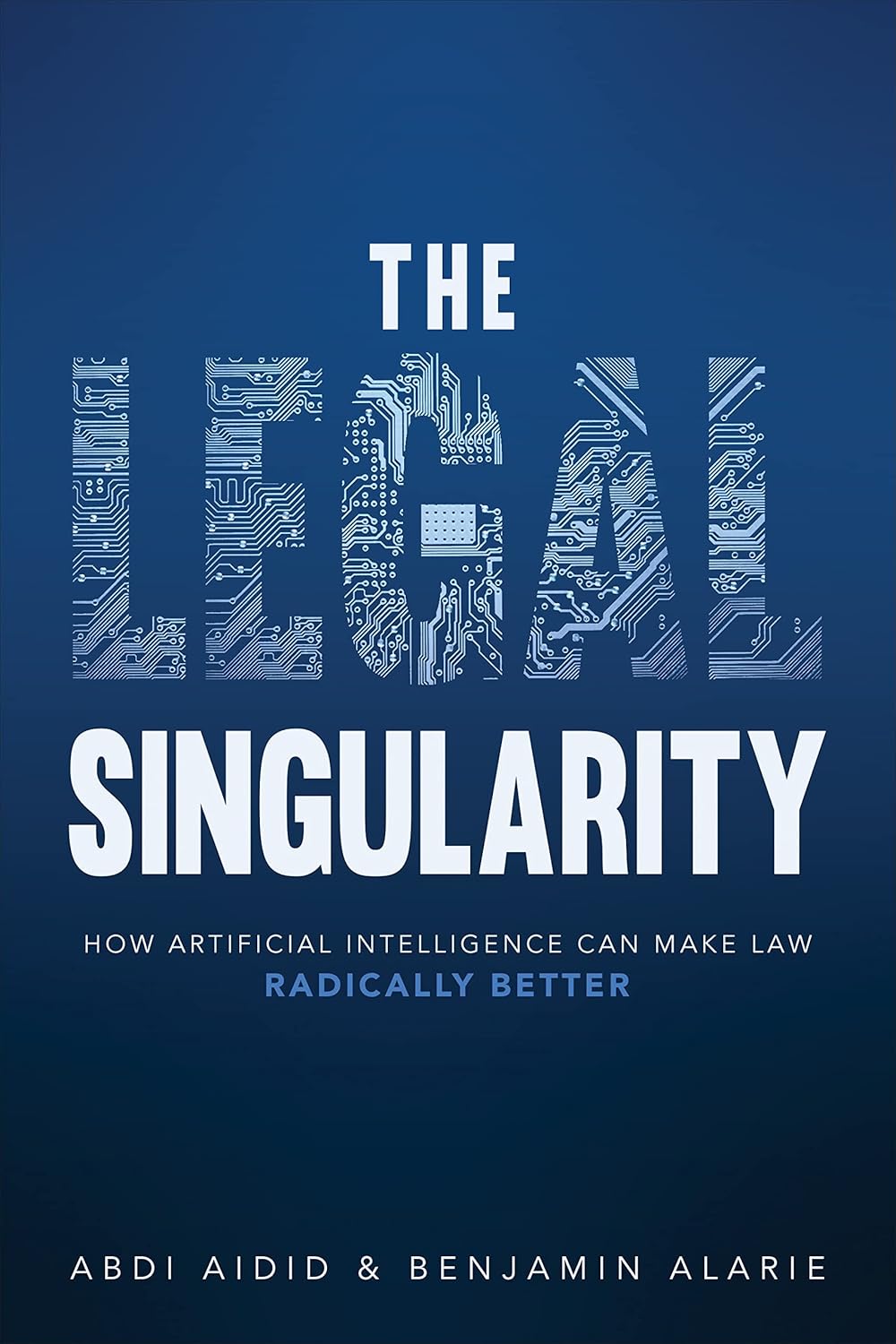
Direct download: academic CV (17 pp., complete publication and teaching record), headshot, and covers (Superjustice, The Legal Singularity). Bios in three lengths are on the About page, and as plain text: short, standard, full. The complete publication list is at /publications. The Superjustice press kit is at superjustice.com/media.


Speaking
Keynotes and conversations on the computational transformation of law, the economics of professional services, and what it takes to build a durable AI-native company in a regulated domain. Speaking inquiries are routed through Fortier PR, above.
The Legal Singularity
The thesis, the evidence, and what a profession built around prediction looks like in practice. Versioned for legal, academic, and generalist audiences.
Superjustice
When computation removes scarcity from the production of legal reasoning, what becomes possible that was not before. Based on the Oxford book.
Tax Administration in the AI Era
A prescriptive account for tax authorities, policymakers, and treasury officials: how AI can reduce administrative burden, improve compliance, and make tax law more legible to the people it governs. Available in a technical version on prediction and audit-grade reasoning.
Building Vertical AI
A decade of lessons from founding and scaling Blue J. Strategy, defensibility, content, talent, capital, and the shape of enterprise AI in professional services.
- Stanford Law
- Oxford
- Cambridge
- University of Chicago
- Columbia Law
- NYU Law
- McGill Law
- TEDx at MIT
- Max Planck Institute
- Hebrew University
- UNSW
- NeurIPS
- American Bar Association
- International Bar Association
- Canadian Tax Foundation
- International Fiscal Association
Upcoming
- 22 Sep 2026 Creative Destruction Lab, University of Toronto Reading group · Leading a discussion comparing Superjustice and Orwell’s 1984. The note →
- 28 Oct 2026 London School of Economics Global Tax Seminar Series · Superjustice book launch seminar, 6:30–8:00 p.m. London, in person and on Zoom, with an interdisciplinary panel of discussants.
- 29 Oct 2026 University of Cambridge Superjustice book launch seminar, Faculty of Law, 4:00–6:00 p.m., hosted by Markus W. Gehring.
- 12 Nov 2026 University of Amsterdam Keynote · International Taxation in the New Global Order, Amsterdam Centre for Tax Law.
- 18–19 Mar 2027 City University of Hong Kong Workshop · Two-day Superjustice academic workshop, School of Law, where the papers of Beyond Superjustice are discussed. With Samuel I. Becher.
- 25–26 May 2027 University of Toronto Symposium · Two-day Superjustice symposium and public event, Faculty of Law, with commentators engaging critically with the book for the University of Toronto Law Journal: the papers of Beyond Superjustice. With Samuel I. Becher.
Interviews, case studies & coverage
- 4 Sep 2026 Future Ready Lawyer Podcast interview, season 2, episode 4: Superjustice, AI, abundant legal help, and the future of lawyers.
- 27 Aug 2026 Explain to Shane Podcast interview: data-driven decisions in the courtroom.
- 12 Aug 2026 The AmberMac Show · SiriusXM Radio and podcast interview: Zuckerberg’s AI manifesto and closing the justice gap.
- 5 Aug 2026 Sarder TV Long-form video interview on the legal singularity, Superjustice, Blue J, AI readiness, professional accountability, and building an AI-native company.
- 5 Aug 2026 Marketplace Tech Radio interview: AI-driven law as an answer to accessible legal help.
- 24 Jul 2026 Law360 Pulse Article on the call for a new framework to govern legal AI. Subscription
- Summer 2026 Yale Law Report Feature on Superjustice. PDF
- 16 Jul 2026 Clearer Than Truth Podcast interview on Superjustice.
- 14 Jul 2026 Tech Snippets Today Podcast interview: Superjustice or algorithmic tyranny.
- 30 Jun 2026 Osler Founder interview: building and scaling Blue J. A conversation about product-market fit, investing in the team, and the changing work of tax professionals. A law firm’s interview with a client, not independent coverage.
- 13 Apr 2026 Oak HC/FT Investor interview: Blue J’s Ben Alarie on why AI is coming for tax. How the company builds domain-specific AI for tax and handles hallucination risk. Published by a venture investor in Blue J, not independent coverage.
- 18 Nov 2025 VentureBeat Profile of Blue J’s pivot from predictive models to generative AI.
- 21 Aug 2025 OpenAI Customer case study: building reliable AI for tax research. How Blue J combines tax expertise, authoritative sources, user feedback, and model evaluations. A supplier’s case study, not independent coverage.
- 3 Aug 2025 The Globe and Mail Report on Blue J’s Series D financing. Subscription
- 22 Feb 2024 KPMG UK Alliance announcement: KPMG UK’s expanded alliance with Blue J for generative AI tax research. A partner’s announcement, dated February 2024, not independent coverage.
Reviews and responses
Independent reviews of the books and scholarly responses to the legal singularity thesis, favourable and critical alike, as they appear; the responses to the 2016 thesis predate the 2023 book, whose fifth chapter answers them in two camps, reductionist (Pasquale, Hildebrandt, Cobbe, and Deakin and Markou) and rule of law (Weber). The reviewers are independent of me; the endorsements printed on the books are not listed here. No independent review of Superjustice had appeared as of September 2026; the first scholarly responses will be the Beyond Superjustice papers, discussed in Hong Kong and presented in Toronto in 2027.
- 22 Jun 2026 SSRN The Legal SingularityChristopher Markou, “Engineered Autopoiesis: Why the Legal Singularity Is Not a Perfected Legal Order,” Centre for Business Research, University of Cambridge, Working Paper No. 552, June 2026, and SSRN 6823198; School of Law, University of Nottingham; noted as Highly Recommended on Lawrence Solum’s Legal Theory Blog, 22 June 2026. Critical, a full-length rejection of the book’s programme: argues that the legal singularity is not a perfected legality but a substitution, an engineered autopoiesis that keeps legality’s vocabulary while replacing its constitutive operations with cybernetic control and relocating discretion into the politics of measurement. A structural critique, drawing on Luhmann and on Golia and Teubner, that the author says the book’s fifth chapter, which sorts its critics into essentialists and rule-of-law theorists, is not calibrated to engage. The programme, he concludes, should be refused because what it promises is no longer law.
- 2026 Canadian Journal of Law and Technology The Legal SingularityMatthew Tse, “Considering the Concept of Law in the Legal Singularity,” (2026) 23(1) Canadian Journal of Law and Technology 117. A scholarly article rather than a review: places the legal singularity in the tradition of classical legal thought and argues that it inherits some of that tradition’s theoretical shortcomings, while finding many existing critiques of the thesis overstated or misguided.
- 23 Jan 2025 Canadian Law Library Review, republished at Slaw The Legal SingularityAllison Harrison. Favourable: a meticulously organized text with relevant examples, though the reviewer would have preferred a deeper analysis of fewer topics.
- Jul 2024 The Modern Law Review The Legal SingularityWilliam Lucy. Critical in part: examines the claim that law can reach functional completeness and finds the book light on technical detail about how prediction would deliver it. Subscription
- 2024 Ottawa Law Review The Legal SingularityWolfgang Alschner, “Techno-Utopianism for Lawyers?,” (2023-2024) 55(2) Ottawa Law Review 187. Mixed: a hopeful and encouraging account that the reviewer says overstates what probabilistic algorithms can achieve, offering soft predictability where the thesis needs hard certainty. PDF
- 2024 Saskatchewan Law Review The Legal SingularityCarla Fast, (2024) 87(1) Saskatchewan Law Review 114. Favourable: a chapter-by-chapter book note concluding that the book makes a strong case that integrating AI will be advantageous to the law, while still requiring practitioners’ active participation. Subscription
- 2022 Journal of Cross-disciplinary Research in Computational Law The legal singularity thesisSimon Deakin and Christopher Markou, “Evolutionary Interpretation: Law and Machine Learning,” (2022) 1(2). Critical of prediction: concludes that machine learning may illuminate long-run legal dynamics but is poorly suited to predicting individual case outcomes, because interpretation relies on natural language to extrapolate from precedent to novel facts. His direct response to the book followed in 2026, above.
- 2020 Michigan Technology Law Review The legal singularity thesisRobert F. Weber, “Will the ‘Legal Singularity’ Hollow Out Law's Normative Core?,” (2020) 27(1) Michigan Technology Law Review 97. Critical: argues that a perfectly predictable, algorithmically expressed legal system would hollow out the rule of law’s normative core, trading the strong-form predictability that guards against arbitrary power for weak-form prediction and treating legal subjects as data points rather than equal members of a political community. The rule-of-law critique that the book’s fifth chapter answers. Open access.
- 2020 Is Law Computable? Critical Perspectives on Law and Artificial Intelligence The legal singularity thesisSimon Deakin and Christopher Markou, “From Rule of Law to Legal Singularity,” the editors’ introduction to Is Law Computable? (Hart Publishing, 2020; 272 pp.; ISBN 9781509937066; foreword by Frank Pasquale). Critical: an eleven-chapter volume written against the thesis, which the introduction quotes from the 2016 paper by name. The editors argue that replacing juridical reasoning with computation would subordinate the rule of law to a rule of technology; chapters by Mireille Hildebrandt, John Morison, Jennifer Cobbe, Roger Brownsword, Sylvie Delacroix, Ryan Abbott and Alex Sarch, Lyria Bennett Moses, Dilan Thampapillai, and Markou with Lily Hands take up code-driven law, the reflexivity of law, functional completeness, and whether there is one singularity or several. The introduction is free on SSRN; the book’s fifth chapter answers the objections.
- 2020 Is Law Computable? Critical Perspectives on Law and Artificial Intelligence The legal singularity thesisChristopher Markou and Simon Deakin, “Ex Machina Lex: Exploring the Limits of Legal Computability,” chapter 2 of Is Law Computable? (Hart Publishing, 2020). Critical: argues that a functionally complete legal system is a mirage that could divert resources to fruitless uses, because the reflexivity of law and the incompleteness of rules facing unstructured social facts resist computational replication. Free on SSRN.
- 2020 Is Law Computable? Critical Perspectives on Law and Artificial Intelligence The legal singularity thesisJennifer Cobbe, “Legal Singularity and the Reflexivity of Law,” chapter 5 of Is Law Computable? (Hart Publishing, 2020). Critical: argues that those pursuing the legal singularity misunderstand both law and the technology; because law is reflexive, automating it would encode its designers’ priorities and reinforce them across society rather than deliver neutrality. From remarks at the Lex Ex Machina conference, Cambridge, December 2019. Free on SSRN.
- 2019 George Washington Law Review The legal singularity thesisFrank Pasquale, “A Rule of Persons, Not Machines: The Limits of Legal Automation,” (2019) 87(1) George Washington Law Review 1. Critical: cites the legal singularity by name and argues that the reasons behind legal obligations must be expressed in language by a responsible person if accountability and a humane legal order are to survive, which sets limits on legal automation. Open access at BrooklynWorks.
- 2018 University of Toronto Law Journal The legal singularity thesisFrank Pasquale and Glyn Cashwell, “Prediction, Persuasion, and the Jurisprudence of Behaviourism,” (2018) 68 (supplement 1) University of Toronto Law Journal 63. Critical: contrasts prediction with persuasion and argues that a jurisprudence built on predicting outcomes, a behaviourism, neglects the reason-giving core of law. In the same 2018 University of Toronto Law Journal symposium issue on artificial intelligence and law as Hildebrandt’s article and as Alarie, Niblett and Yoon’s How Artificial Intelligence Will Affect the Practice of Law.
- 2018 University of Toronto Law Journal The legal singularity thesisMireille Hildebrandt, “Law as Computation in the Era of Artificial Legal Intelligence: Speaking Law to the Power of Statistics,” (2018) 68 (supplement 1) University of Toronto Law Journal 12. Critical: names Alarie’s bet on the legal singularity and argues that it mistakes the mathematical simulation of legal judgment for legal judgment itself, confronting the assumptions of computational systems with those of law and the rule of law. Her chapter Code-Driven Law: Freezing the Future and Scaling the Past, in Is Law Computable? (2020), continues the argument.
Watch
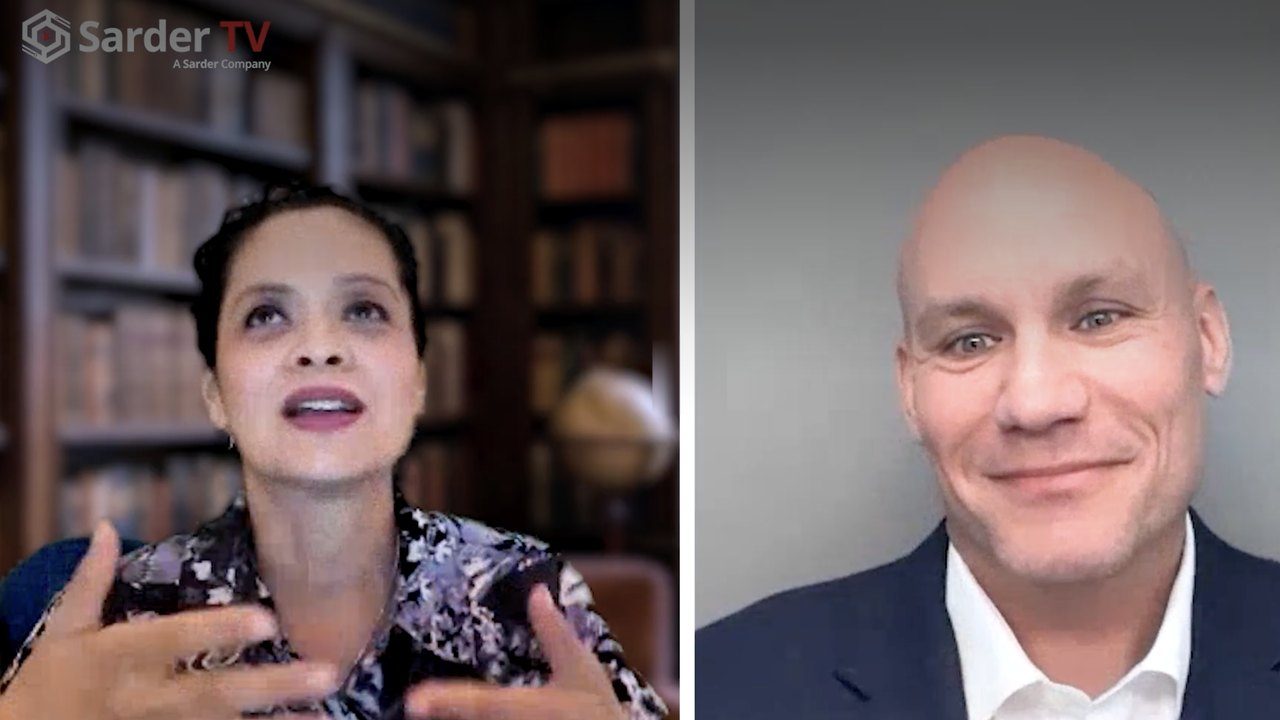
Sarder TV · 5 August 2026Full interview with Vaishali Jain for Sarder Author Talks: from the 2016 paper to Superjustice, and what building Blue J has taught him. Show page ↗
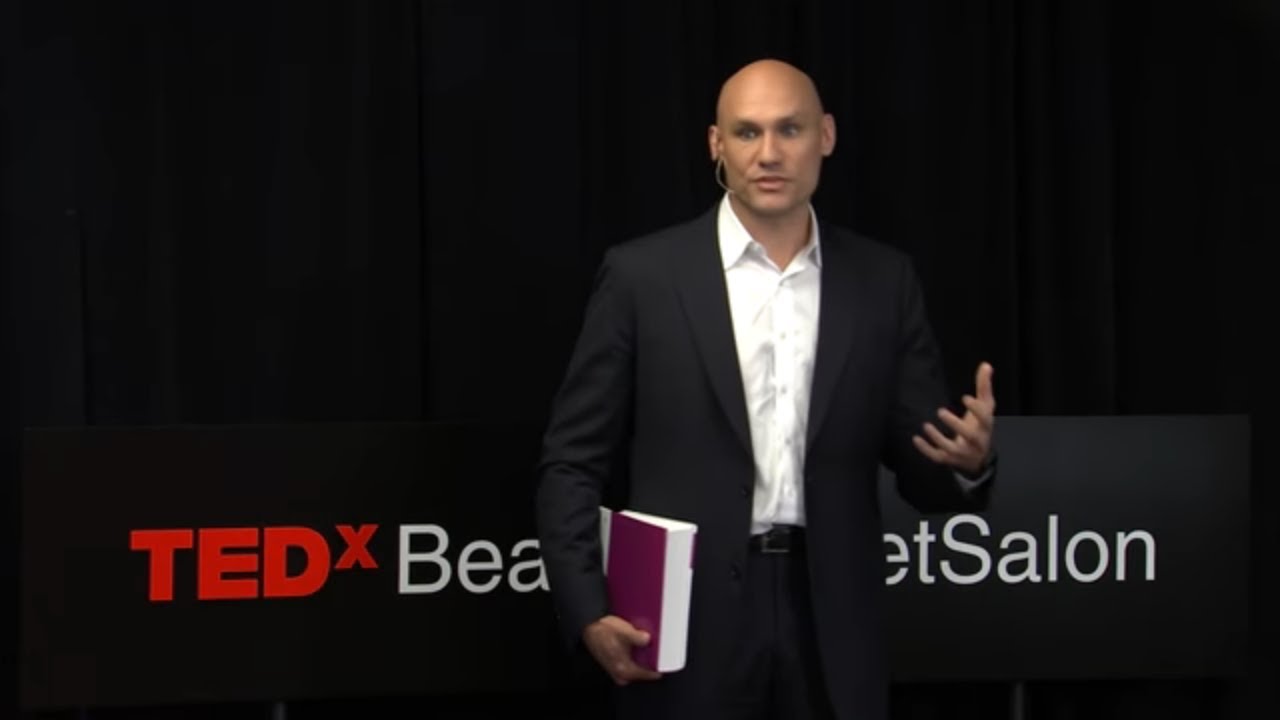
TEDx at MIT · 2018The 2018 talk, Transcending Books: What’s Next for Law and Society. On TED ↗
Players load from youtube-nocookie.com only when you press play.